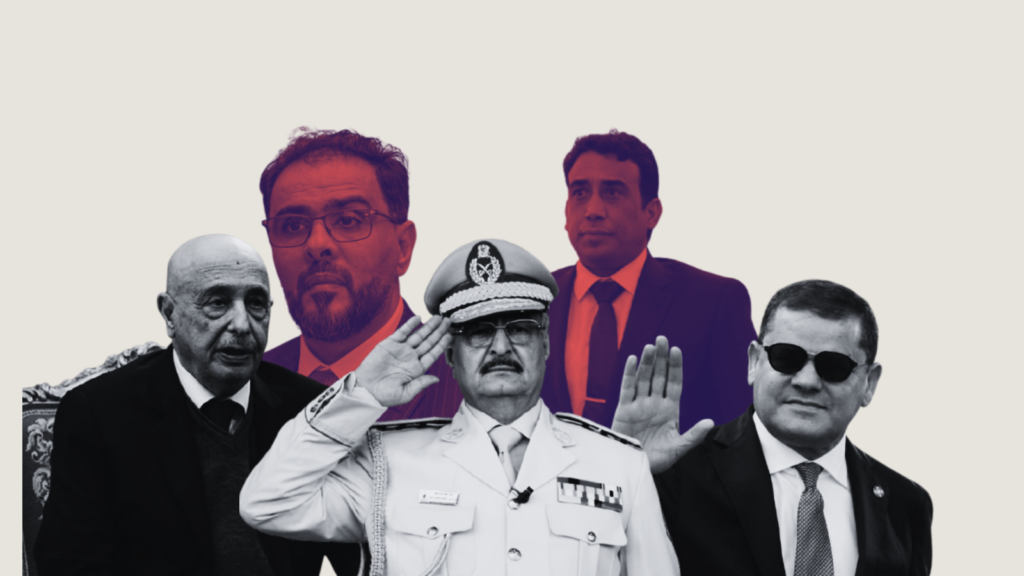
Libya’s political division remains unresolved, with rival authorities and institutions continuing to operate in the east and west of the country. Efforts to establish a unified government and create the conditions for national elections remain stalled, while disputes over political legitimacy, sovereign institutions, and the legal framework for elections continue to impede state reunification and the broader UN-led political process.
Latest Updates
Dbeiba and Takala Meeting Revives Political Alliance Talks in Western Libya
The recent meeting between Libya's interim Prime Minister Abdul Hamid Dbeiba and Supreme State Council head Mohamed Takala has reignited discussions about political alliances in western Libya. The encounter followed a period of strained relations due to differing stances on the US initiative and investigations into the Arkeno oil company. Observers view the meeting as either a strategic move to reorganize political support ahead of upcoming election-related decisions or as Dbeiba's attempt to demonstrate continued political backing amid growing domestic protests over electricity and fuel shortages.
Source: aawsat.com
Libya's High State Council Rejects Central Bank Governor's Resignation
Libya's High State Council officially rejected the resignation of Central Bank Governor Naji Issa, urging him to continue his duties. Issa is reportedly considering returning to his position under three conditions: pressure from the House of Representatives and the State Council to expedite the unified development agreement, halting new salary increases, and enacting laws to protect state resources and reduce foreign currency pressure. This development follows Issa's discussions with the UN Special Representative on Libya about economic reforms amid ongoing political divisions.
Source: aawsat.com
Libya's Central Bank Governor Sets Conditions to Withdraw Resignation
Libya's Central Bank Governor, Naji Issa, insists on three key conditions to retract his resignation amid escalating economic pressures. He demands accelerated implementation of the unified spending agreement, a halt to salary increases deemed unsustainable, and enforcement of trade policies to protect state resources and curb smuggling. Political leaders, including the Presidential Council and parliamentary committees, have rejected his resignation, emphasizing the importance of his continued leadership to stabilize Libya's financial institutions and promote economic reforms amid ongoing political divisions.
Source: aawsat.com
Assassination of East Libya Military Intelligence Chief Fuels Security Concerns
Fuzi Al-Mansouri, head of military intelligence for Libya's eastern National Army, was killed in a car bomb explosion outside his home in Benghazi. The National Army condemned the assassination as a cowardly act and vowed to punish those responsible, emphasizing continued efforts to combat terrorism and unify Libya's institutions. This incident highlights ongoing security challenges amid the country's political division between the eastern National Army and the western Government of National Unity, despite a 2020 ceasefire. The killing intensifies tensions as political talks on institutional unification continue.
Source: aawsat.com
Libyan Leaders Clash Over Military Role Amid U.S. Unity Initiative
A public dispute between Libya's interim Prime Minister Abdul Hamid Dbeibeh and military commander Khalifa Haftar over the military's role in politics highlights deep divisions affecting the U.S.-led initiative to unify Libya's executive authority. Dbeibeh insists on military unification without political interference, while Haftar demands the army maintain a central decision-making role. Analysts view their statements as negotiation tactics rather than final positions, with the U.S. initiative aiming to form a unified government and prepare for elections despite ongoing tensions.
Source: aawsat.com
Libya's Central Bank Governor Resigns Amid Political and Financial Pressures
Libya's Central Bank is facing a new crisis as Governor Naji Issa formally requested to resign, citing sensitive reasons linked to political and financial pressures. His resignation reflects ongoing challenges including stalled public finance reforms, interference by influential actors, and failure to unify government spending. The move raises concerns about potential leadership vacuums amid persistent political division and economic instability, including a sharp depreciation of the Libyan dinar and difficulties in managing oil revenues and government payrolls. This development tests the fragile progress made since the bank's partial unification in 2024.
Source: aawsat.com
Clashes in Sorman and Zawiya Subside After Military Intervention
Violent clashes erupted between militias affiliated with Libya's Government of National Unity in Sorman and Zawiya, involving drone strikes and heavy weapons. The fighting lasted several hours, causing civilian panic and a prison break in Sorman. The conflict subsided after the deployment of the 52nd Brigade to Sorman, which helped restore relative calm. Local authorities suspended work and urged residents to stay indoors. The incidents highlight ongoing security fragility in western Libya, with armed groups operating despite nominal government control.
Source: aawsat.com
Libyan Leaders Call for Consensus-Based Political Process Amid Protests
In response to recent protests in western Libya, Presidential Council head Mohamed al-Menfi and High Council of State leader Mohamed Takala emphasized the need for continued coordination among national institutions to enhance stability. Following Takala's re-election as council president, both leaders stressed prioritizing national interest and advancing a comprehensive political settlement to conclude transitional phases and fulfill national milestones. The UN mission welcomed the election results and urged cooperation to implement the political roadmap aimed at holding simultaneous presidential and parliamentary elections under a supreme sovereign committee.
Source: aawsat.com
Mohamed Takala Elected Head of Libya's Supreme State Council with 80 Votes
Mohamed Takala was elected president of Libya's Supreme State Council after securing 80 votes in a runoff against Belkacem Qazit, who received 56 votes. The election involved 136 total votes with two blank ballots and no abstentions. Takala previously held the presidency in August 2023 and has been active in Libya's political scene since 2012, including participation in the 2021 National Dialogue Forum in Geneva.
Source: alwasat.ly
Libya's Dbeiba Deploys Deterrence Force Amid Tripoli Protests
In response to escalating nighttime protests in Tripoli over electricity shortages and government policies, Libyan Prime Minister Abdul Hamid Dbeiba has deployed the Deterrence Force, led by Abdul Raouf Kara, to secure key government sites and main roads. Protesters have closed several government offices with metal welding, including the Parliament and Presidential Council buildings. The move marks a renewed reliance on Kara's force despite past tensions, aiming to contain the civil unrest driven by the Friday Market movement and broader dissatisfaction in western Libya.
Source: aawsat.com
Widespread Protests and Ministry Closures Paralyze Western Libya
In Tripoli, protesters from the 'Friday Market Movement' and local activists have escalated demonstrations by closing several government ministries and oil facilities, accusing the interim Government of National Unity of corruption and economic mismanagement. Key institutions including the Ministry of Local Governance, Ministry of Civil Service, and the National Electricity Company have been blocked with earth barriers. Despite these disruptions, the government has largely ignored the protests. Meanwhile, negotiations in Zuwara led to the peaceful end of a sit-in at the Mellitah oil complex, with promises to improve electricity distribution and maintain energy supplies.
Source: aawsat.com
Libyan Presidential Council Divided Over Intelligence Agency Financial Controls
A renewed dispute has erupted within Libya's Presidential Council after member Moussa Al-Koni demanded the suspension of financial signature changes at the General Intelligence Agency. Al-Koni objected to a recent letter from Council President Mohamed Al-Menfi endorsing new financial controllers without full council consensus, citing violations of the political agreement and judicial orders. The conflict follows Al-Menfi's controversial dismissal and replacement of intelligence agency leadership, deepening divisions amid ongoing disagreements over council decision-making and sovereign authority.
Source: aawsat.com
Virtual Governments Emerge in Libya Amid Political Impasse and Deepening Crisis
The political landscape in Libya has seen a surge in unilaterally announced "virtual governments" on social media platforms, with individuals declaring themselves prime ministers without official domestic authorization or international recognition. Experts describe this phenomenon as the peak of political chaos and an outdoor theatrical display underscoring the severity of the country's ongoing stalemate and stalled election processes.
Source: Aawsat
Libya Power Crisis Deepens Rift Between Takala and Dbeibah Amid Nationwide Blackouts
Power outages in Libya have intensified the political friction between High Council of State President Mohamed Takala and Interim Government of National Unity Prime Minister Abdul Hamid Dbeibah, following Takala's criticism of the government's handling of the crisis. Libya continues to grapple with the aftermath of a power grid collapse that disrupted daily life and affected wells tied to the Great Man-Made River. The High Council of State expressed deep concern over the ongoing blackouts and extreme heat, blaming the government for administrative failure despite substantial financial allocations to the electricity sector.
Source: Aawsat